



Senior Living Activities: 25 Ideas Seniors Will Love
A senior living calendar can be packed with events and still feel surprisingly empty. There may be games on Monday, exercise on Tuesday, crafts on Wednesday, and a social gathering on Thursday—yet some residents may still choose to stay in their rooms.
Why?
Because senior living activities are not really about filling time. They are about giving people a reason to get up, connect with others, use familiar skills, or simply look forward to something.
That is where the right activity can make a difference. A simple card game may turn into a lively conversation. A gardening project may bring back memories of a favorite backyard. A familiar song may encourage someone who rarely speaks to join in.
The goal is not to create the busiest calendar possible. It is to create a calendar that people actually want to participate in.
Why Senior Living Activities Matter More Than a Busy Calendar
One of the easiest mistakes in planning senior living activities is assuming that more choices automatically create better experiences.
They do not.
Residents have different personalities, interests, energy levels, mobility, and past experiences. One person may love a crowded trivia group, while another would rather spend an hour painting quietly. Someone who used to garden may become much more interested when gardening is offered than when another generic game is added to the calendar.
Good activities can support social connection, movement, creativity, mental stimulation, and a sense of purpose. NIA also encourages older adults to stay active and socially connected through activities that fit their interests and abilities.
So instead of asking, “How many activities can we schedule?” a better question is:
“What would make this person want to come back tomorrow?”
That small change can completely alter the way a senior living program is planned.
25 Senior Living Activities Seniors Can Actually Enjoy
The best senior living activities do not have to be expensive or complicated. Many can be organized with ordinary supplies, familiar music, a little creativity, and a willingness to adapt.
Social Senior Living Activities
1. Coffee and conversation groups
Set aside a relaxed time for residents to sit together and talk. Give the group a simple topic, such as favorite vacations, childhood memories, movies, or holiday traditions.
2. Book clubs
Choose short books, stories, or large-print editions and allow plenty of time for conversation. The discussion can sometimes be more valuable than finishing the entire book.
3. Group trivia
Trivia can cover music, television, history, sports, local places, or popular culture. Questions from different decades can encourage residents to share stories as well as answers.
4. Card and board games
Classic games are excellent senior living activities because they provide an easy reason to sit together. Offer familiar choices such as cards, checkers, dominoes, or simple board games.
5. Intergenerational visits
Invite children, students, or community groups to participate in crafts, storytelling, music, or games. These visits can create conversations that would not happen during an ordinary activity session.
Physical Senior Living Activities
6. Walking groups
A short walk can combine gentle movement with social time. The route can be adjusted according to residents’ abilities.
7. Chair yoga
Chair-based movement can give residents another way to participate when standing activities are difficult or uncomfortable.
8. Gentle stretching
A short stretching session can become part of a morning routine without requiring a complicated setup.
9. Dancing
Put on familiar music and let residents participate however they comfortably can. Dancing can be standing, seated, or simply moving along to the rhythm.
10. Gardening
Container gardens, herbs, flowers, and small planting projects can turn ordinary outdoor time into one of the most enjoyable senior living activities on the calendar.
For general guidance about physical activity for older adults:
Creative Senior Living Activities
11. Painting
Residents do not need to consider themselves artists. Simple watercolor projects, seasonal pictures, or guided painting can make creativity feel accessible.
12. Crafts
Choose projects that can be completed in one session. Keep several difficulty levels available so residents can choose how much help they want.
13. Knitting or needlework
Residents who already know these skills can work on their own projects or teach someone else. Teaching can make an ordinary hobby feel much more meaningful.
14. Scrapbooking
Photographs, postcards, recipes, and family memories can become the foundation for a personal scrapbook.
15. Seasonal decorating
Let residents help decorate common areas for holidays and seasons. Giving people a role in the community can make the activity more rewarding than simply watching someone else decorate.
Brain and Memory Activities
16. Memory games
Matching games, word games, familiar objects, and simple puzzles can provide mental stimulation while remaining flexible enough for different ability levels.
17. “Remember When?” trivia
Ask about old songs, television shows, famous places, fashion, or everyday life from earlier decades. The stories that follow can become the real activity.
18. Word and number puzzles
Crosswords, word searches, Sudoku, and other puzzles can offer different levels of challenge.
19. Music memory sessions
Play familiar songs and invite residents to identify the singer, finish a lyric, or share a memory connected to the music.
20. Learn something new
Try beginner technology lessons, photography, cooking, language basics, or another subject residents genuinely want to explore.
For readers looking for more ideas focused specifically on cognitive engagement:
{→ cognitive activities for seniors }
Meaningful Senior Living Activities
21. Resident-led classes
A resident who knows how to cook, sew, garden, paint, play an instrument, or tell stories can lead a small session. It changes the person from a participant into a contributor.
22. Simple volunteering projects
Making greeting cards, assembling care packages, or supporting a local cause can give residents a feeling that their time still matters.
23. Cooking or baking together
Use familiar recipes and divide tasks according to ability. Food also naturally creates conversation and memories.
24. Animal visits
Pet visits can give residents companionship and something positive to talk about afterward.
25. Community celebration projects
Let residents help plan birthdays, seasonal celebrations, cultural events, or other gatherings. Planning itself can become one of the most meaningful senior living activities.
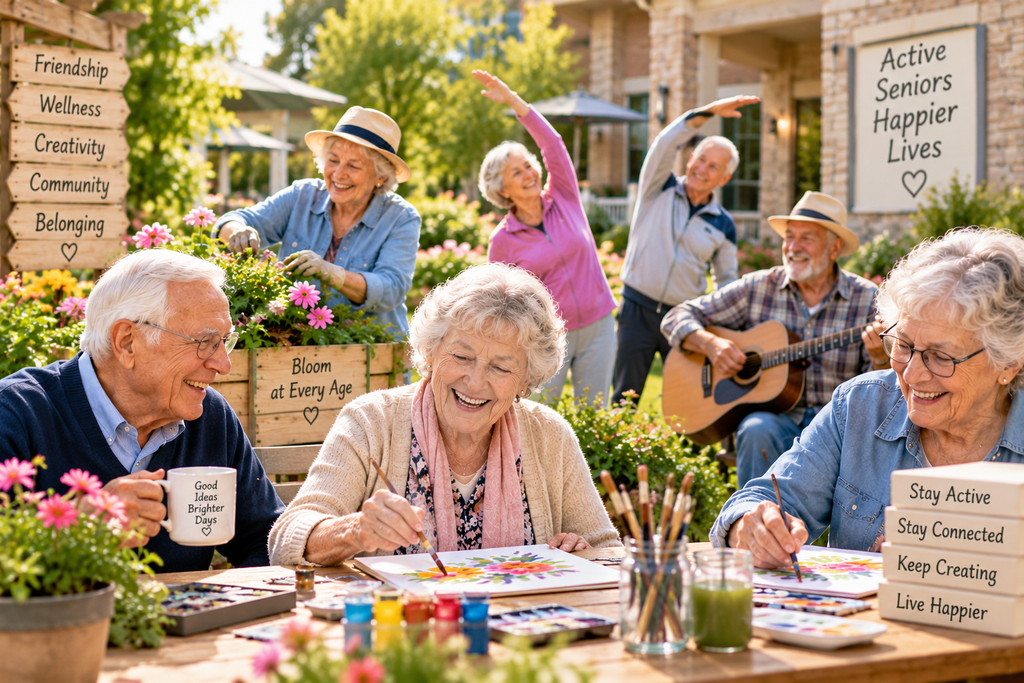
Activities for Seniors in Assisted Living
Not every resident can participate in the same way. That is particularly important when choosing activities for seniors in assisted living.
Someone with limited mobility might enjoy chair exercises, music, crafts, puzzles, card games, or small conversation groups. A resident who prefers quiet experiences might choose reading, painting, journaling, or listening to familiar music.
Someone who loves people may prefer trivia, singing, gardening, cooking, or group games.
The important thing is not to create one activity that works for everyone. Instead, offer different ways to participate.
A resident may not be able to join a walking group, for example, but could still help plan the route, greet other participants, take photographs, or join the conversation afterward.
For additional ideas specifically focused on seniors with cognitive needs:
{ → activities for seniors with dementia }
Senior Living Activities for Active Independent Seniors
Older adults living independently may want activities that are more challenging, social, or adventurous.
Walking clubs, photography groups, gardening, cooking classes, day trips, technology workshops, volunteering, fitness groups, and hobby clubs can all work well.
This is where active independent senior living can provide plenty of opportunities for residents to stay involved without making every activity feel like structured care.
For people interested in independent living for active seniors, variety is especially important. Some residents may want exercise in the morning and a social activity in the afternoon. Others may prefer hobbies, outings, or volunteer work.
The best programs provide choices rather than assuming every active older adult enjoys the same things.
What Makes Senior Living Activities Actually Engaging?
Here is the surprising part: the activity itself is only half the equation.
The other half is how people feel while doing it.
Effective senior living activities tend to share five qualities:
- They are easy to join.
- They can be adapted.
- They encourage connection.
- They reflect real interests.
- They give residents a reason to return.
That is why an informal coffee group with six enthusiastic residents can sometimes be more successful than a large event with fifty people who barely interact.
For active senior living communities, this is an important distinction. A full calendar may look impressive, but participation, enjoyment, and connection tell you much more about whether the program is working.
How to Choose the Right Activity
Before adding another event to the calendar, ask five simple questions:
Does this person enjoy it?
Past hobbies are often a better guide than generic assumptions about age.
Can the activity be adapted?
Change the pace, materials, seating, or level of assistance when necessary.
Does the person prefer groups or smaller interactions?
Not everyone becomes more social simply because an activity is offered to a large group.
Does it provide a sense of purpose?
Teaching, creating, helping, and contributing can be just as valuable as entertainment.
Would the person choose to do it again?
That final question may be the best test of all.
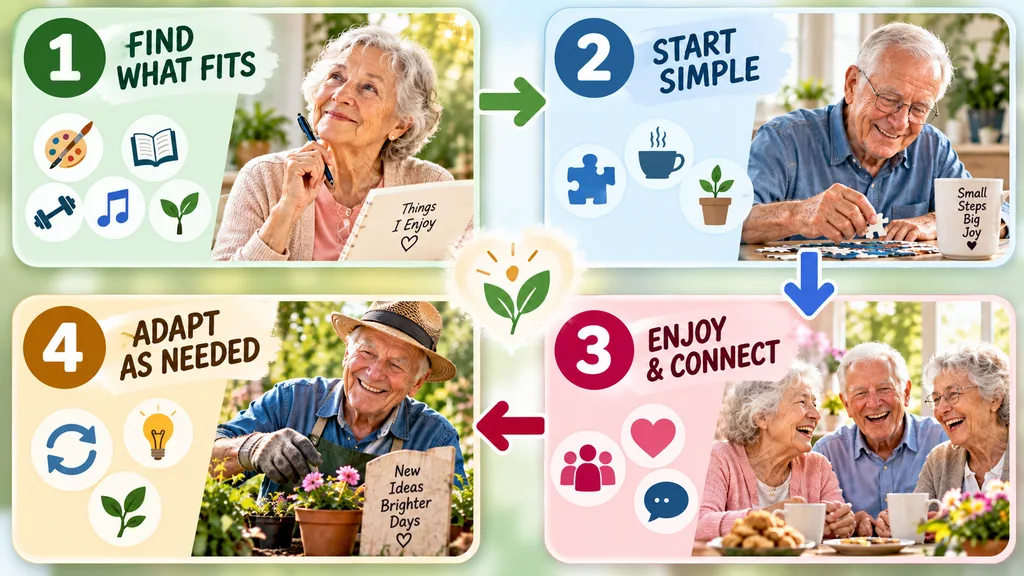
From “Something to Do” to Something to Look Forward To
Imagine two calendars.
The first is packed with events, but residents attend because they feel they should.
The second has fewer events, yet residents talk about them beforehand, invite friends, remember what happened afterward, and ask when the next one will be.
The second calendar is winning.
That is the real purpose of thoughtful senior living activities. They can turn an ordinary afternoon into a conversation, a hobby into a friendship, or a familiar song into a treasured memory.
And once you stop trying to fill every hour and start designing activities around people, the possibilities become much more interesting.
For another collection of practical ideas for older adults:
For additional ideas specifically related to memory care programs:
Start with one activity that fits the people you are serving—not the calendar. If they enjoy it, keep it. If they come back asking for more, you may have found something even better.
Looking Beyond Activities: Supporting Brain Health as We Age
Senior living activities can support connection, movement, creativity, and mental engagement. But healthy aging also raises another question: what else can we do to support brain health, memory, focus, and mental clarity over time?
If you want to explore that side of healthy aging, Mindoxa offers educational resources focused on brain health, memory, focus, mental energy, and functional mushrooms such as Lion’s Mane.
Take a look, explore the information, and decide for yourself what feels relevant to your goals.