



Dementia and Paranoia: 7 Ways Caregivers Can Respond
Have you ever been accused of stealing something you never touched—or heard a loved one with dementia insist that someone is trying to harm them?
For caregivers, dementia and paranoia can be especially painful because the accusation may come from someone you love and trust. You may know the belief is not true, yet arguing about it can sometimes make the situation even more difficult.
The surprising part is that the person experiencing paranoia may feel completely certain about what they believe. Their fear is real to them, even when the situation itself is not.
Understanding that difference can change how you respond.
What Is Dementia and Paranoia?
Dementia and paranoia can occur together when changes in memory, perception, reasoning, and the ability to interpret everyday situations make a person more likely to misunderstand what is happening around them.
Someone might believe that a family member moved their belongings, that a caregiver is hiding something, or that money has been taken.
This does not necessarily mean the person is deliberately being difficult. Their brain may be struggling to make sense of missing information.
Is Paranoia an Early Symptom of Dementia?
Paranoia can appear at different points during dementia, so it should not automatically be treated as proof that someone is in an early or late stage.
The important question is often not simply when it happens, but what changed and what may be triggering it.
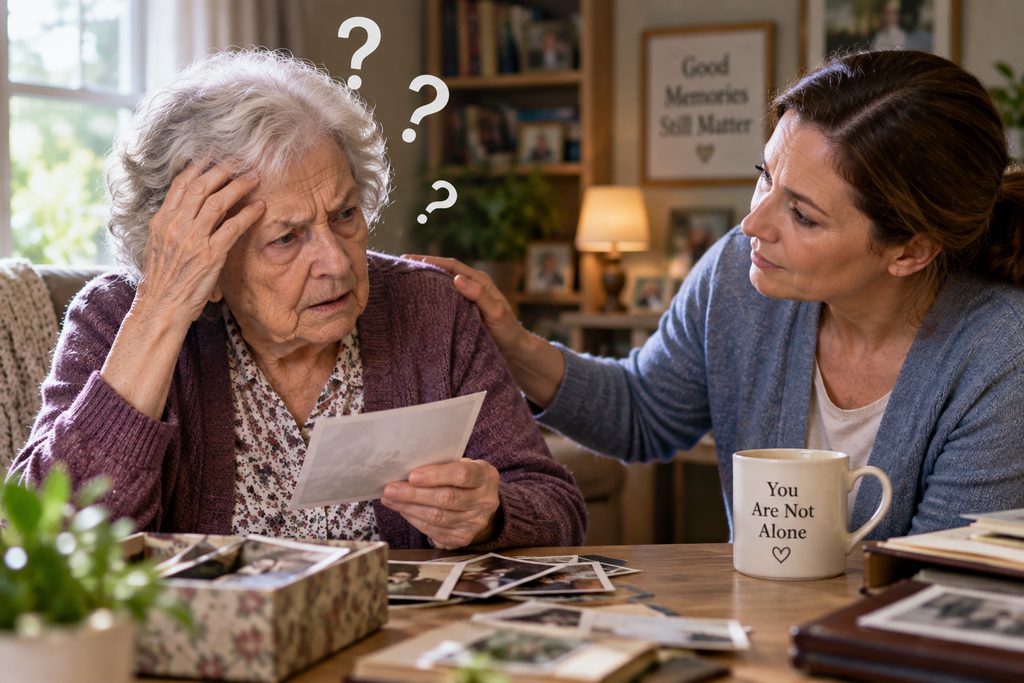
What Causes Paranoia in People With Dementia?
Memory problems can create an unusual chain of events.
A person may put an important item somewhere, forget doing so, and later find that it is missing. Their brain still needs an explanation, so they may conclude that someone took it.
Changes in vision, hearing, sleep, unfamiliar surroundings, or stressful situations can also contribute to confusion. For caregivers, understanding these triggers can make dementia and paranoia easier to recognize and manage before a difficult moment escalates.
Some forms of dementia may have particularly complex behavioral or perceptual symptoms. For example, vascular dementia and paranoia can occur together, while Lewy body dementia and paranoia may occur alongside other changes in perception or thinking.
What Stage of Dementia Is Paranoia?
There is no single dementia stage in which paranoia always appears.
It can happen during different stages and may become more noticeable as cognitive changes increase. That is why caregivers should pay attention to patterns, triggers, and sudden changes, rather than assuming that paranoia alone tells you exactly how advanced dementia is.
And if the behavior appears suddenly or changes dramatically, it deserves particular attention.
7 Ways to Manage Dementia and Paranoia
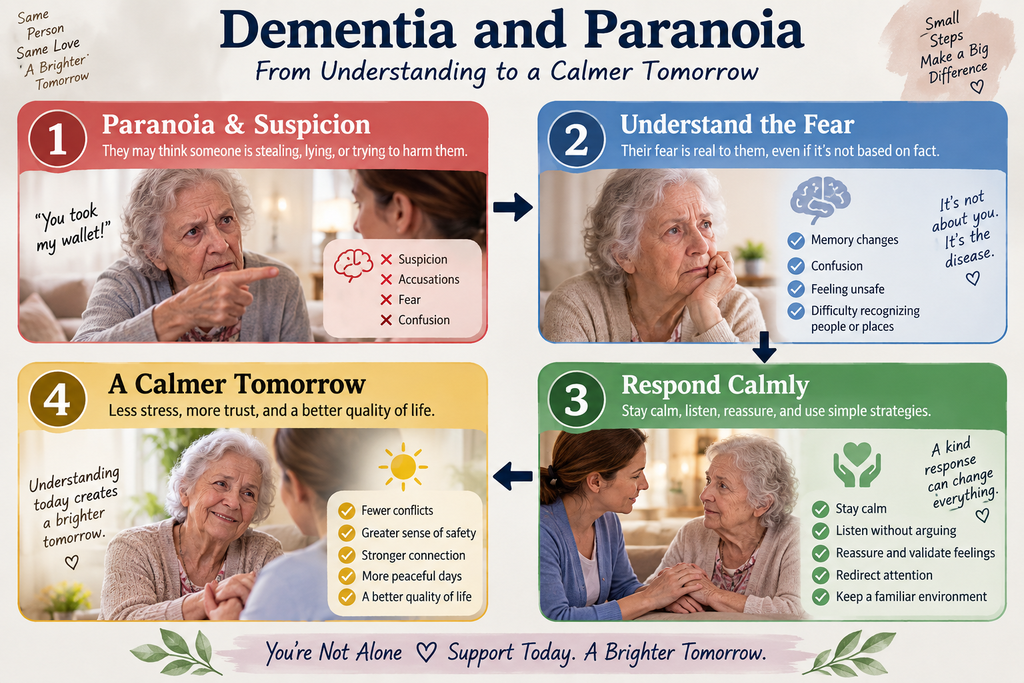
The goal is not to win an argument. The goal is to help the person feel safe enough for the situation to settle.
1. Stay Calm Instead of Arguing
If someone says, “You stole my money,” your first instinct may be to immediately prove that you did not.
But saying “That is ridiculous. I would never do that” may make them feel dismissed.
Instead, keep your voice calm and acknowledge the emotion behind the statement.
2. Listen to the Fear Behind the Accusation
You do not have to agree with the belief to acknowledge the person’s feelings.
Try to understand what they are worried about.
A simple response such as, “That sounds frightening. Let’s see if we can figure out what happened,” can be more useful than repeatedly explaining why they are wrong.
3. Reassure Without Trying to Prove Them Wrong
When dealing with dementia and paranoia, repeated explanations may not solve the problem because the underlying memory difficulty remains.
Offer reassurance and focus on what can be done next.
This changes the conversation from “Who is right?” to “How can we make this feel safer?”
4. Look for Triggers
Notice when paranoia tends to happen.
Does it occur in the evening? After visitors arrive? When the house is noisy? When the person is tired?
Keeping a simple record can reveal patterns that are difficult to notice in the moment.
5. Use Distraction When the Conversation Goes in Circles
Sometimes the best response is not another explanation.
A familiar activity, snack, short walk, photograph album, or another pleasant distraction may help shift attention.
{ → Useful distraction techniques for dementia caregivers }
6. Make Important Belongings Easier to Track
If misplaced objects repeatedly lead to accusations, create predictable places for frequently used items.
This can be especially helpful with keys, wallets, glasses, or documents.
Memory supports may also make everyday routines easier.
{→ Dementia memory aids }
7. Know When to Ask for Professional Help
If paranoia becomes severe, causes major distress, interferes with daily life, or creates a safety concern, talk with a healthcare professional.
When Dementia and Paranoia Focus on Money or Valuables
Money can become a particularly sensitive subject.
With dementia and paranoia about money, a person may believe that cash, cards, jewelry, or important documents have been stolen.
The accusation may feel extremely convincing to them.
Instead of turning the situation into an investigation or confrontation, try calmly acknowledging the concern and helping look for the missing item.
If these incidents happen repeatedly, keeping important belongings organized and using consistent routines may reduce future confusion.
How to Handle Paranoia and Dementia at Home
A predictable environment can make daily life easier. Simple routines can also give someone experiencing dementia and paranoia a greater sense of familiarity and security.
Keep routines relatively consistent. Reduce unnecessary noise and confusion. Give the person enough time to process questions rather than rushing them.
Most importantly, remember that paranoia and dementia are not simply a communication problem. The person may be experiencing the world differently from you.
That insight can make a huge difference in how you respond.
{→ 20 things not to say to someone with dementia }
When Should You Talk to a Doctor?
Seek professional advice when paranoia becomes frequent, unusually intense, frightening, or unsafe.
It is also worth discussing changes that appear suddenly, especially when they are significantly different from the person’s usual behavior.
Frequently Asked Questions About Dementia and Paranoia
Can Dementia Cause Paranoia?
Yes. Changes associated with dementia can contribute to suspicious thoughts, false beliefs, and difficulty interpreting situations.
What Is the Most Common Delusion in Dementia?
One common pattern involves believing that possessions or money have been stolen, particularly when the person cannot remember where they placed something.
How Do You Treat Paranoia in Dementia Patients?
Management depends on the individual and the underlying cause. Calm communication, reducing triggers, predictable routines, and professional evaluation when necessary can all be important.
At What Stage of Dementia Do People Hallucinate?
Hallucinations can occur in different forms of dementia and at different stages. Their presence alone does not determine the exact stage of the disease.
The Goal Is Not to Win the Argument
When dealing with dementia and paranoia, it can be tempting to focus on proving what really happened.
But sometimes the more useful question is:
“What can I do right now to help this person feel safe?”
That small change in perspective can turn a tense accusation into a calmer conversation.
And once you learn to recognize the triggers, respond to the emotion, and redirect attention when needed, these difficult moments can become much easier to navigate.
If you want to make everyday dementia care less stressful, explore more practical memory and caregiving strategies in our Learn More resources.
One More Thing Worth Exploring
When memory changes begin to show up as forgotten words, repeated questions, or everyday brain fog, it can be useful to look beyond the immediate problem and think about how we support the brain and memory over time.
That is also where ingredients and approaches designed around memory support become worth understanding—especially for adults who want to stay mentally engaged as they age.
Phytomem One is one approach focused on concerns such as memory, brain fog, forgetfulness, and difficulty finding words. Its “Toxic Brain Shards” concept offers another perspective on why protecting everyday memory may deserve more attention.
If this is something you have been wondering about, take a closer look and LEARN MORE.