

What Stage of Dementia Is Not Bathing? 7 Signs and What They Mean
If someone with dementia suddenly stops bathing, it can leave a caregiver wondering what has changed. Is this simply forgetfulness, or does it mean the dementia has reached a more advanced stage?
What stage of dementia is not bathing? There is no single dementia stage defined by not bathing. Difficulties with bathing can appear as dementia progresses, including during mild or middle stages, and may become more significant as a person needs increasing help with daily activities. The important clue is not the bath itself, but what has changed around it.
That distinction matters because someone who avoids a shower may not be refusing to cooperate. They may be confused, frightened, embarrassed, physically uncomfortable, or simply unable to remember the steps.
What Stage of Dementia Is Not Bathing?
When asking what stage of dementia is not bathing, many caregivers expect one simple answer, such as “middle stage.” The reality is more complicated.
Bathing is a multi-step daily activity. A person has to remember that bathing is necessary, find the bathroom, prepare the water, undress, get into the tub or shower, use soap and shampoo, rinse, dry off, and get dressed again.
Dementia can interfere with one or several of these abilities.
NIA notes that people with mild Alzheimer’s can already experience difficulty completing normal daily tasks, including bathing. As the disease progresses, people may need increasing assistance with everyday activities.
So what stage of dementia is not bathing cannot be answered by bathing behavior alone.
At What Stage Do Dementia Patients Forget to Shower?
One of the easiest mistakes to make is assuming that every bathing problem means the person has reached late-stage dementia.
For some people, the first change is simply forgetting. They may forget when they last showered, lose track of their normal routine, or genuinely believe they already bathed.
For others, the problem is not memory alone. They may remember that they are supposed to shower but no longer know how to organize all the steps.
This is why what stage of dementia is not showering is not a precise diagnostic question. The behavior needs to be considered alongside other changes in memory, judgment, planning, mobility, communication, and everyday independence.
Forgetting to Shower Is Not the Same as Refusing to Shower
There is an important difference between forgetting and not wanting to bathe.
Forgetting suggests that memory or task sequencing may be interfering.
Refusing may point to fear, embarrassment, discomfort, confusion, or a desire to remain independent.
Understanding that difference can completely change how a caregiver responds.
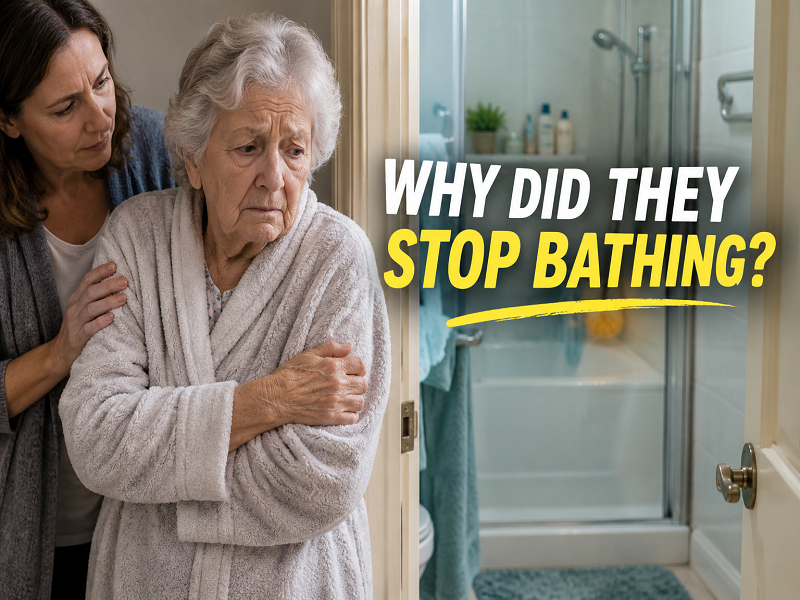
Why Do Dementia Patients Not Want to Bathe?
Sometimes the biggest insight is this:
The person may not be saying “no” to cleanliness. They may be saying “no” to something that feels confusing or unsafe.
If you are wondering what stage of dementia is not wanting to bathe, remember that the behavior itself does not identify a specific stage.
NIA explains that bathing can feel scary, embarrassing, or physically unpleasant to a person with Alzheimer’s, and these feelings can lead to resistance.
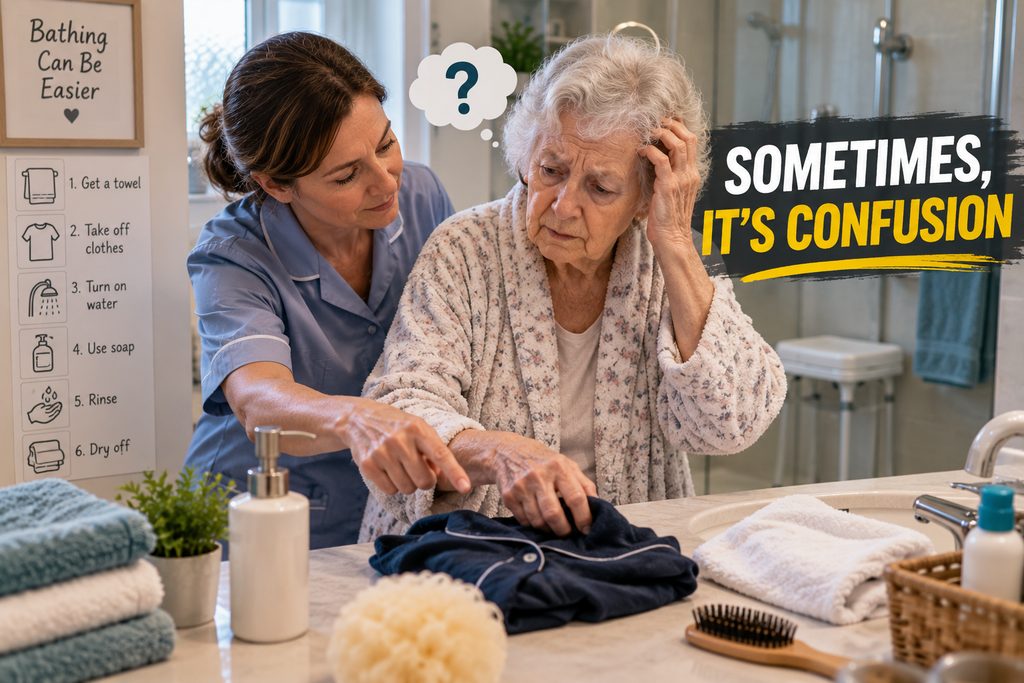
They May Forget the Routine
A familiar shower can become a complicated sequence of steps. The person may not know what to do next without guidance.
They May Fear Falling
Getting into a tub or standing under a shower can feel physically unsafe, especially when balance or mobility has changed.
They May Feel Embarrassed
Bathing is private. Someone who has always managed personal care alone may feel uncomfortable when another person suddenly needs to help.
The Bathroom May Feel Confusing
Bright lights, slippery floors, running water, unfamiliar equipment, or too many objects can make the environment overwhelming.
Physical Problems May Make Bathing Hard
Pain, weakness, reduced mobility, or discomfort can turn an ordinary shower into an unpleasant experience.
{→ why do people with dementia not want to shower}
How Many Stages of Dementia Are There?
If you are trying to understand what stage of dementia is not bathing, it helps to know that dementia does not progress according to one universal checklist.
Some descriptions use broad categories such as mild, moderate, and severe dementia. Other systems divide progression into more stages.
That is why how many stages of dementia are there does not have one answer that applies to every staging system.
More importantly, bathing should never be used as a stand-alone test for determining someone’s stage.
Those changes provide much more useful information about increasing care needs.
Does Not Bathing Mean Late-Stage Dementia?
No.
Not bathing does not automatically mean someone has late-stage dementia.
This is one of the most important things for caregivers to understand.
A person may have difficulty bathing while still being able to communicate clearly, walk independently, eat without assistance, and participate in many everyday activities.
As dementia becomes more advanced, dependence usually extends across multiple areas of daily life rather than appearing as one isolated problem.
So if you are searching what stage of dementia is not bathing because a loved one has recently stopped showering, try not to jump immediately to the conclusion that they are nearing the final stage.
Instead, look for the pattern of changes.
7 Signs Bathing Has Become Difficult
Here are seven clues that a bathing problem may be connected to dementia-related changes:
1. They forget that they need to bathe.
The person may genuinely believe they showered recently.
2. They forget the steps.
They may enter the bathroom but not know what to do next.
3. They need repeated reminders.
One reminder is no longer enough, and gentle step-by-step guidance becomes necessary.
4. They become anxious around the bathroom.
Fear of falling, water, or unfamiliar equipment can cause resistance.
5. They resist assistance.
The person may feel embarrassed or frustrated about losing independence.
6. They become uncomfortable with water.
Temperature, noise, or the feeling of water on the skin can become overwhelming.
7. They need help with other personal-care tasks too.
Difficulty with dressing, grooming, toileting, or other daily activities provides more context than bathing alone.
These signs can help you understand whether the problem is becoming part of a broader change in daily functioning.
How Can Caregivers Help Someone Who Refuses to Bathe?
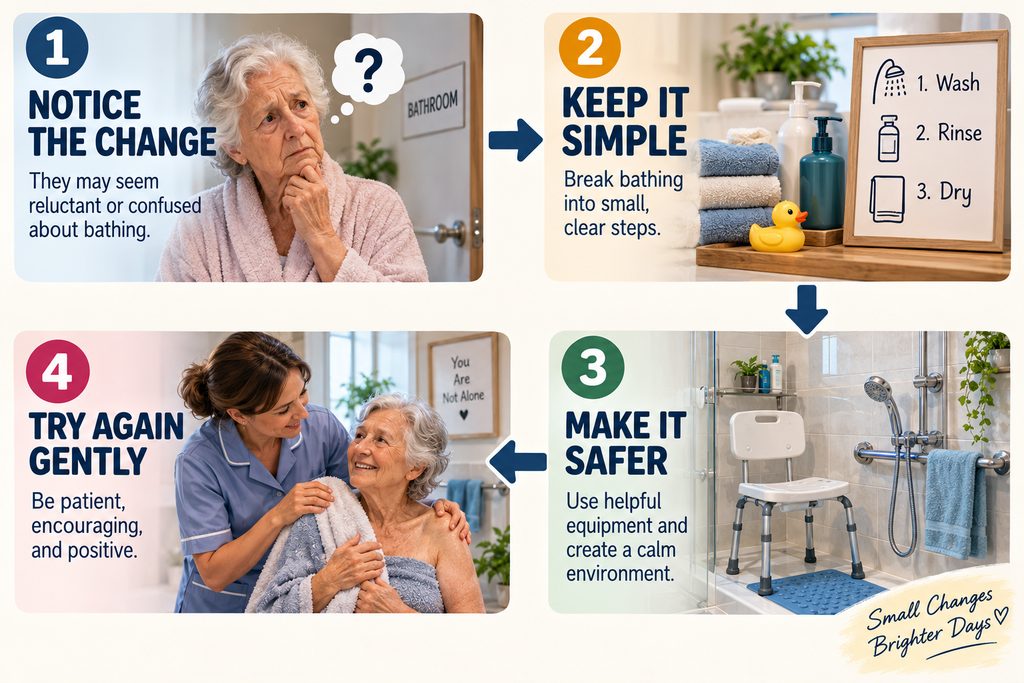
Once you understand the reason, the goal changes from “How do I make them take a shower?” to “How can I make this easier and safer?”
That small change in approach can make a surprisingly big difference.
Keep the Routine Familiar
Try bathing at roughly the same time and in the same way. Familiar routines can reduce confusion. NIA recommends maintaining a consistent bathing schedule when possible.
Give One Step at a Time
Instead of saying, “Go take a shower and get cleaned up,” give one simple instruction.
For example:
“Let’s go to the bathroom.”
Then:
“Sit here.”
Then:
“Here’s the towel.”
NIA recommends step-by-step guidance when a person can still participate in bathing.
Make the Bathroom Safer
Keep the room warm and well lit. Prepare the supplies before bathing, and consider appropriate safety equipment such as grab bars, a bath chair, or a nonslip bath mat. Never leave someone with significant dementia-related safety problems alone in a tub or shower.
Protect Their Dignity
A towel can help maintain privacy. Let the person do whatever parts of bathing they can safely manage.
If a full bath or shower becomes too upsetting, NIA notes that a sponge bath can be an alternative for cleaning important areas on days when bathing is not possible.
{ → 20 things not to say to someone with dementia }
The goal is not to win a battle over bathing.
The goal is to help the person feel safe, respected, and successful.
When Should You Talk to a Doctor?
A gradual change in bathing can happen as dementia progresses, but a sudden major change deserves attention.
Talk with a healthcare professional if the person suddenly becomes much more confused, develops unusual behavior, seems to be in pain, becomes unusually weak, or develops skin problems or other signs of illness.
Regular medical care is important for people with Alzheimer’s and dementia, particularly when new changes appear.
The Bottom Line
So, what stage of dementia is not bathing?
There is no single stage that can be identified simply because someone stops bathing. Bathing difficulties may appear as dementia affects memory, planning, sequencing, mobility, and independence, and the problem may become more pronounced as care needs increase.
Instead of asking only, “What stage are they in?” ask:
“What changed, and what is making bathing difficult now?”
That question can lead you to a much more useful answer—and a much gentler solution.
{→ activities for seniors with dementia}
Frequently Asked Questions
What stage of dementia is not showering?
There is no specific dementia stage defined by not showering. Difficulty with bathing can occur at different points and should be considered alongside other changes in daily functioning.
What stage of dementia is not wanting to bathe?
Not wanting to bathe does not identify a particular stage. Fear, embarrassment, confusion, physical discomfort, and loss of independence can all contribute to resistance.
What stage of dementia is not wanting to shower?
What stage of dementia is not wanting to shower cannot be determined from this behavior alone. Look at the person’s overall ability to manage daily activities.
How many stages of dementia are there?
Different staging systems divide dementia progression differently. Some use broad categories such as mild, moderate, and severe, while others use more detailed stages.
Sometimes, bathing problems are only one visible sign of a much bigger change.
The same person may also struggle with forgetfulness, brain fog, or finding the right words—changes that can be easy to overlook at first.
So another question becomes worth asking: what can actually support memory and mental clarity as these changes become more noticeable?