

Amnesia vs Dementia: What’s the Difference?
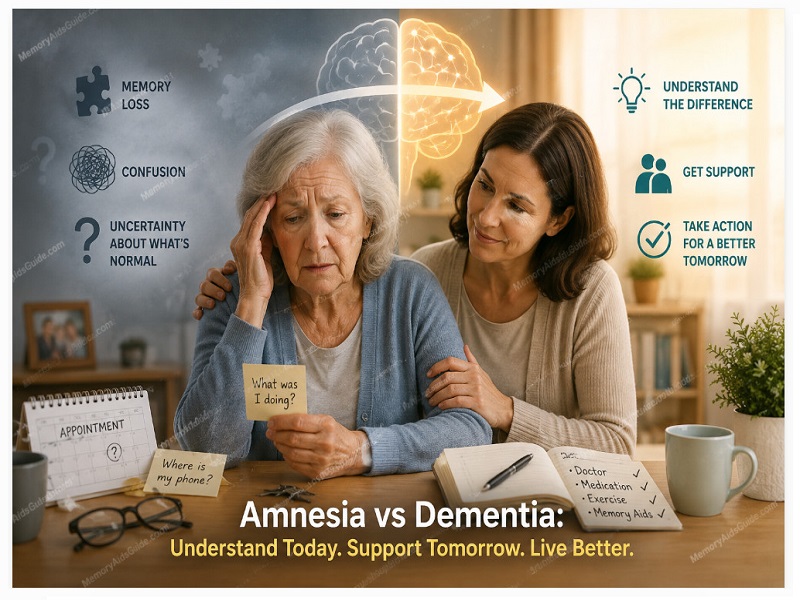
Amnesia and dementia can both involve memory problems, but they are not the same thing. Amnesia primarily affects memory, while dementia involves a broader decline in thinking and cognitive abilities that can interfere with everyday life. Amnesia vs dementia is an important distinction when trying to understand different types of memory problems.
That distinction matters if you or someone you care about has started forgetting things more often. Memory loss does not automatically mean dementia, and amnesia can have many causes that have nothing to do with dementia. Understanding amnesia vs dementia can help put these changes into the right context.
Amnesia vs Dementia: Key Differences
The biggest difference is what happens beyond memory. Amnesia vs dementia is largely about whether the main problem involves memory or whether there is a broader decline in thinking and cognitive abilities.
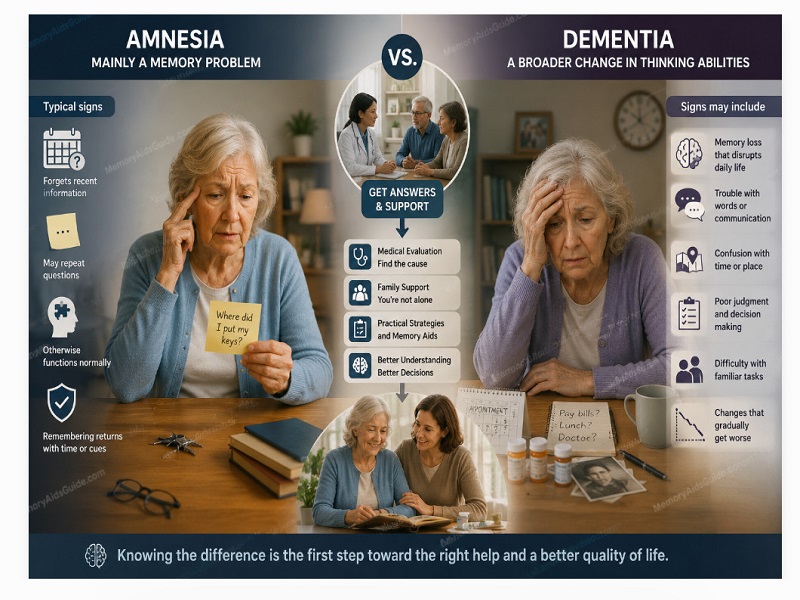
With amnesia, the main problem is remembering information or forming new memories. A person may have trouble learning new information or recalling events that happened in the past. Other abilities, such as general knowledge, attention, personality, or learned skills, may remain relatively intact.
Dementia is broader. Memory may be affected, but a person can also develop problems with language, reasoning, judgment, attention, problem-solving, or everyday activities. Dementia is a general term for this type of cognitive decline rather than the name of one specific disease. This broader pattern is central to the amnesia vs dementia difference.
| Amnesia | Dementia |
|---|---|
| Mainly affects memory | Can affect memory and other thinking abilities |
| May involve difficulty forming or retrieving memories | May involve language, judgment, reasoning, behavior, and daily tasks |
| Can have many possible causes | Can result from several different diseases or conditions |
| May be temporary or long-lasting, depending on the cause | Some forms are progressive, depending on the underlying condition |
| Does not automatically mean dementia | Memory loss can be one part of dementia |
In short, amnesia isn’t the same as dementia. A person can have amnesia without having dementia, while someone with dementia may experience significant memory loss as part of a larger pattern. That is the key point to remember when considering amnesia vs dementia.
How Do You Know If It’s Memory Loss or Dementia?
This is often the real question behind a search for amnesia vs dementia.
Everyone forgets things sometimes. You might forget a name and remember it later, misplace your glasses, or briefly forget what day it is. These kinds of lapses can happen with normal aging. When considering amnesia vs dementia, occasional forgetfulness by itself does not automatically point to dementia.
The concern grows when memory or thinking problems begin interfering with everyday life.
For example, someone may repeatedly have trouble paying bills, managing familiar tasks, following conversations, finding their way around familiar places, or keeping track of dates. NIA notes that repeated poor decisions, problems managing bills, losing track of time, trouble with conversations, and frequently misplacing things without being able to find them can be signs of a more serious cognitive problem. These patterns are important when looking at amnesia vs dementia.
So the difference between ordinary forgetfulness and dementia is not simply how often someone forgets. The pattern, severity, and effect on everyday functioning matter.
Memory problems can also come from medications, head injuries, emotional conditions, and other medical problems. That is why memory loss alone is not enough to diagnose dementia. This is another reason the amnesia vs dementia distinction cannot be based on forgetfulness alone.
What Is Amnesia?
Amnesia is significant loss of memory or difficulty forming and retrieving memories.
Some people with amnesia have trouble learning new information. Others have difficulty remembering events or information they previously knew. The pattern depends on the underlying cause. The pattern of symptoms is an important part of understanding amnesia vs dementia.
Amnesia can be associated with brain injury, stroke, seizures, certain medicines, alcohol-related conditions, and other problems affecting the brain. Some forms can be temporary, while others can last much longer. These different causes can make amnesia vs dementia more complicated than simply comparing two types of forgetfulness.
One unusual form is transient global amnesia. It causes a sudden period in which a person cannot form new memories and may repeatedly ask the same questions. The person generally knows who they are and recognizes familiar people, and the episode usually resolves within 24 hours.
Transient global amnesia differs from dementia because it is a sudden, temporary episode rather than the broader cognitive decline associated with dementia. However, sudden unexplained memory loss still needs prompt medical evaluation because other serious conditions can look similar. This is an important point when comparing amnesia vs dementia.
Treatment for amnesia depends on its cause. There is no single treatment that works for every type, but treating an underlying condition may improve the memory problem in some cases. The cause therefore matters when distinguishing amnesia vs dementia and considering what happens next.
What Is Dementia?
Dementia describes a decline in cognitive abilities that becomes serious enough to affect daily life.
Memory loss can be one symptom, but it is not the whole picture. Dementia may also affect communication, judgment, reasoning, attention, planning, behavior, and the ability to complete familiar activities. These broader changes are what make the amnesia vs dementia comparison important.
There are several types of dementia, including Alzheimer’s disease, vascular dementia, Lewy body dementia, and frontotemporal dementia.
Dementia is also not a normal part of aging. The risk increases as people get older, but many older adults never develop dementia. Age alone does not determine amnesia vs dementia or whether a person has dementia.
Amnesia vs Dementia vs Alzheimer’s
These terms are closely related, but they describe different things.
Amnesia describes a significant memory problem.
Dementia describes a broader decline in cognitive functioning.
Alzheimer’s disease is a specific brain disease and the most common cause of dementia. It can cause memory loss as well as changes in thinking, language, judgment, and other abilities. This is why amnesia vs dementia vs Alzheimer’s involves three related but different concepts.
So, Alzheimer’s vs dementia is not exactly the same comparison as amnesia vs dementia. Alzheimer’s can cause dementia, while amnesia describes a pattern of memory impairment. Understanding amnesia vs dementia can help keep these terms from being treated as though they all mean the same thing.
What About Delirium?
Delirium is different again. It usually develops suddenly and involves confusion and changes in awareness or thinking. Dementia generally develops more gradually, although the exact course depends on the underlying condition. This is another reason amnesia vs dementia should not be confused with every condition that causes sudden changes in thinking.
Sudden confusion or sudden memory loss should not simply be assumed to be dementia or normal aging. It needs medical attention.
When Should You Talk to a Doctor About Memory Loss?
If memory loss is new, persistent, getting worse, or beginning to interfere with everyday life, it is worth discussing with a healthcare professional. This is especially important when you are trying to understand whether symptoms fit amnesia vs dementia or another condition.
Unexplained memory loss can have many possible causes, including some that may be treatable. A medical evaluation can look at when the problem started, what type of memory is affected, medications, health conditions, previous injuries, and other changes in thinking or behavior. A proper evaluation is more useful than trying to determine amnesia vs dementia from memory loss alone.
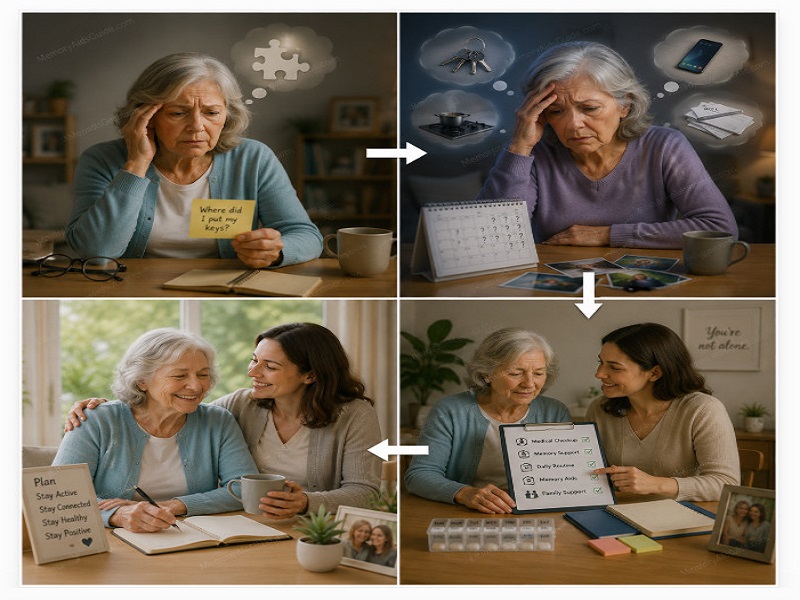
Sudden memory loss or confusion deserves prompt medical attention because conditions such as stroke, seizure, or head injury can sometimes produce similar symptoms.
Amnesia vs Dementia: The Bottom Line
The easiest way to remember the difference is:
Amnesia mainly involves memory. Dementia involves a broader decline in cognitive abilities that can affect everyday life.
That simple distinction is the foundation of understanding amnesia vs dementia.
Memory loss does not automatically mean dementia. If the changes are persistent or begin affecting daily activities, however, they deserve attention rather than being dismissed as normal aging.
Understanding that difference can help you ask better questions, recognize changes earlier, and know when it is time to seek professional advice. That is ultimately why the difference between amnesia vs dementia matters.
Frequently Asked Questions
How do you know if it’s memory loss or dementia?
Memory problems can have many causes. Dementia becomes more concerning when memory problems occur alongside ongoing changes in judgment, reasoning, language, behavior, or everyday functioning. A healthcare professional can help determine whether the problem is related to normal aging, amnesia, mild cognitive impairment, dementia, medication, or another condition. This broader pattern is important when considering amnesia vs dementia.
What are the three types of amnesia?
There is no single universally accepted medical system that divides amnesia into exactly three types. Amnesia can be described by the kind of memory affected, such as difficulty forming new memories or recalling past information, as well as by specific patterns such as transient global amnesia. The cause and pattern of memory loss are important when evaluating it. This is also relevant when distinguishing amnesia vs dementia.
Can amnesia be cured?
It depends on the cause. Some memory problems may improve when an underlying condition is treated, while other forms of amnesia may last longer or become permanent. Treatment is therefore based on finding and addressing the underlying cause when possible. The difference in causes is another important part of understanding amnesia vs dementia.
What are the first signs of dementia?
Early signs can include persistent memory problems, repeating questions, difficulty managing familiar tasks, trouble finding words, poor judgment, confusion about dates or places, and changes that begin interfering with everyday activities. The symptoms can vary depending on the type of dementia. These broader changes help explain the difference between amnesia vs dementia.
At what age does dementia typically start?
There is no single age when dementia starts. The likelihood increases with age, but dementia is not a normal part of aging, and some forms can begin at younger ages. The age of onset depends on the underlying disease or condition. Age alone cannot determine whether a person has amnesia vs dementia.
Memory loss, brain fog, and trouble finding familiar words can make you wonder if there is more to the story than simply getting older.
One idea worth exploring is the concept of Toxic Brain Shards and the approach it takes to everyday memory support.
If you’re curious about this approach and what Phytomem One contains, Learn More About Phytomem One.