


Activities for Memory Care: 30 Meaningful Ideas to Try
Finding the right activities for memory care can be harder than it sounds. An activity may look simple on paper, yet feel confusing, frustrating, or uninteresting to someone living with memory loss.
The good news is that meaningful activities do not have to be complicated. Sometimes a favorite song, a familiar photograph, folding a few towels, or watering a plant can create a better moment than a complicated game.
The goal of activities for memory care is not to keep someone busy every minute. It is to create opportunities for connection, participation, movement, comfort, and a sense of purpose.
Why Activities Matter in Memory Care
Good activities for memory care can give structure to the day while creating opportunities for social interaction and enjoyment. Music, movement, familiar hobbies, household tasks, and simple creative activities can all be adapted to a person’s abilities and interests.
The National Institute on Aging recommends matching activities to what a person can do, helping them get started when needed, watching for frustration, and allowing them to simply watch if that is what they prefer.
That last point is easy to overlook. Participation does not always mean completing something. Sometimes listening, watching, holding an object, or sitting beside someone is enough.
30 Activities for Memory Care
There is no single perfect list of activities for memory care because every person has different interests, abilities, and good and difficult days. Use these ideas as starting points, then adjust them to the person.
Music & Reminiscence Activities
1. Listen to familiar music
Play songs the person already knows. Let them sing, tap along, or simply listen.
2. Sing favorite songs
Choose a few well-known songs rather than introducing unfamiliar music.
3. Look through photo albums
Use old family photographs to encourage conversation without testing the person’s memory.
4. Create a memory box
Fill a small box with familiar photographs, postcards, fabric, or safe household objects.
5. Talk about familiar places
A former home, favorite vacation spot, school, or neighborhood can provide an easy conversation starter.
These can be especially useful memory care activities for seniors because they begin with familiarity rather than requiring a correct answer.
Games & Cognitive Activities
6. Picture matching
Match pairs of large, easy-to-see pictures.
7. Large-print bingo
Use large cards and keep the game relaxed rather than competitive.
8. Simple puzzles
Choose puzzles with larger pieces and familiar images.
9. Sort everyday objects
Try sorting socks, plastic utensils, large buttons, or other safe objects by type or color.
10. Familiar word games
Use simple categories such as animals, foods, songs, or places.
11. Card matching
Start with only a few pairs and add more if the person enjoys it.
12. Simple trivia
Ask about familiar topics such as music, sports, movies, or local history.
These games for memory care work best when they feel like play rather than a test. The goal is participation, not getting every answer right.
{→ cognitive activities for seniors }
Creative Activities
13. Coloring
Large, simple coloring pages can be easier to handle than detailed designs.
14. Watercolor painting
Let the person experiment with colors without worrying about creating a perfect picture.
15. Simple crafts
Choose crafts with only a few easy steps.
16. Seasonal collages
Use safe paper, photographs, leaves, or magazine pictures to create a seasonal collage.
17. Decorate greeting cards
Cards can be made for family members, friends, or other residents.
The finished product is not the important part. The enjoyable process is.
Sensory Activities
18. Texture basket
Offer several safe objects with different textures to touch and explore.
19. Familiar scents
Use familiar scents such as lavender, vanilla, or fresh herbs only when appropriate and safe for the person.
20. Sensory fabric activities
Try soft towels, cotton, fleece, or other familiar fabrics.
21. Hand massage
A gentle hand massage may provide a quiet one-on-one moment when appropriate.
22. Familiar household objects
Objects connected with past routines can encourage touching, holding, or conversation.
Sensory activities can be particularly useful when a person no longer enjoys complicated tasks. They can also become calming activities for seniors with dementia when the environment is quiet and comfortable.
{ → activities for seniors with dementia}
Movement & Social Activities
23. Chair exercises
Try gentle seated movements that match the person’s abilities.
24. Gentle stretching
Keep movements simple and stop if something causes discomfort.
25. Walking together
A short walk can combine movement with companionship.
26. Simple dancing
Play familiar music and encourage gentle movement.
27. Balloon activities
Tapping or passing a balloon can create a simple group activity when appropriate and supervised.
Physical activity may offer benefits for people living with dementia, but the amount and type of activity should be adapted to the person’s abilities and health. NIA notes that several short periods of activity may be more realistic than one long workout for some people.
Meaningful Daily Activities
28. Folding towels
Give the person a small basket of clean towels to fold.
29. Setting the table
Simple tasks such as placing napkins or utensils can provide a sense of participation.
30. Gardening or plant care
Watering plants, touching soil, or helping with simple gardening tasks can be enjoyable for someone who previously liked working with plants.
This is where activities for memory care can become surprisingly meaningful. A person may respond better to a familiar household task than to something specifically labeled a “memory activity.”
How to Choose Activities for Memory Care Residents
The best activities for memory care residents are usually connected to the person’s interests, history, abilities, and current mood.
Start with what they already enjoy. Someone who loved cooking may respond to sorting ingredients or setting a table. Someone who enjoyed music may prefer singing over puzzles.

Next, look at the difficulty. If an activity has five steps, try giving one step at a time. If the person becomes frustrated, simplify it instead of insisting that they finish.
NIA recommends adapting activities as Alzheimer’s disease progresses and paying attention to whether the person is becoming frustrated.
And remember: an activity should not feel like an exam.
How to Adapt Activities for Different Abilities
For someone with earlier-stage dementia, activities for seniors with dementia may include familiar games, crafts, conversation, cooking-related tasks, or hobbies they have enjoyed for years.
As abilities change, simplify the instructions and reduce the number of choices. Visual cues, familiar objects, and hands-on activities can make participation easier.
For someone with more advanced dementia, music, sensory experiences, gentle movement, familiar voices, photographs, and one-on-one interaction may be more appropriate than activities requiring multiple steps.
The right activity can change from day to day. A person who enjoys a puzzle one afternoon may prefer music the next morning.
How to Make Memory Care Activities More Meaningful
Meaningful activities for memory care often have one thing in common: they connect with the person’s identity.
Instead of asking, “What activity should we make them do?” try asking:
“What has this person always enjoyed doing?”
Give simple choices. Keep the environment comfortable. Allow plenty of time. And praise participation rather than performance.
A successful activity might end with a finished painting—or it might simply end with a smile, a familiar song, or a few minutes of calm connection.
What If Someone Doesn’t Want to Participate?
Do not force it.
If someone refuses an activity, try again later, make it easier, change the setting, or choose something completely different. Sometimes sitting nearby and doing the activity yourself is enough to invite participation.
NIA also recommends patience and redirection when a person with Alzheimer’s becomes upset, including shifting attention toward music, reading, walking, or another activity.
{→ useful distraction techniques for dementia caregivers }
The important thing is to notice what the person is communicating rather than treating refusal as failure.
A Simple Daily Memory Care Activity Routine
A day does not need to be packed with activities for memory care.
Try a simple rhythm:
Morning: gentle movement or a short walk
Late morning: coloring, crafts, or a simple game
Afternoon: music, photographs, or reminiscence
Late afternoon: folding towels, gardening, or another familiar task
Evening: quiet music, conversation, or a calming sensory activity
Short, enjoyable moments can be easier to manage than one long activity session.
Frequently Asked Questions
What are good activities for memory care?
Good activities for memory care include music, photo albums, simple games, crafts, sensory activities, gentle movement, gardening, and familiar household tasks. The best choice depends on the person’s interests and abilities.
What are good activities for memory care residents?
Useful options include singing, bingo, coloring, sorting objects, folding towels, gardening, walking, and looking through photographs. Activities should be adjusted to the resident’s abilities and comfort.
What are some calming activities for dementia patients?
Familiar music, looking through photographs, quiet sensory activities, gentle hand massage, simple conversation, and a short walk may provide calming opportunities. The environment matters too: reduce noise and distractions when possible.
What are good group activities for memory care?
Group singing, simple bingo, balloon activities, seasonal crafts, gentle exercise, and familiar trivia can work well. Keep instructions simple and make participation optional.
The Goal Is Meaningful Engagement
The best activities for memory care are not necessarily the most impressive ones.
They are the ones that give someone a chance to participate, connect, move, remember something familiar, or simply enjoy the moment.
So start small.
Choose one activity connected to something the person already likes. Make it easier than you think it needs to be. Watch their reaction. If they enjoy it, you have found something worth repeating.
And if they don’t?
That’s okay, too.
{ → 101 things to do with dementia patients }
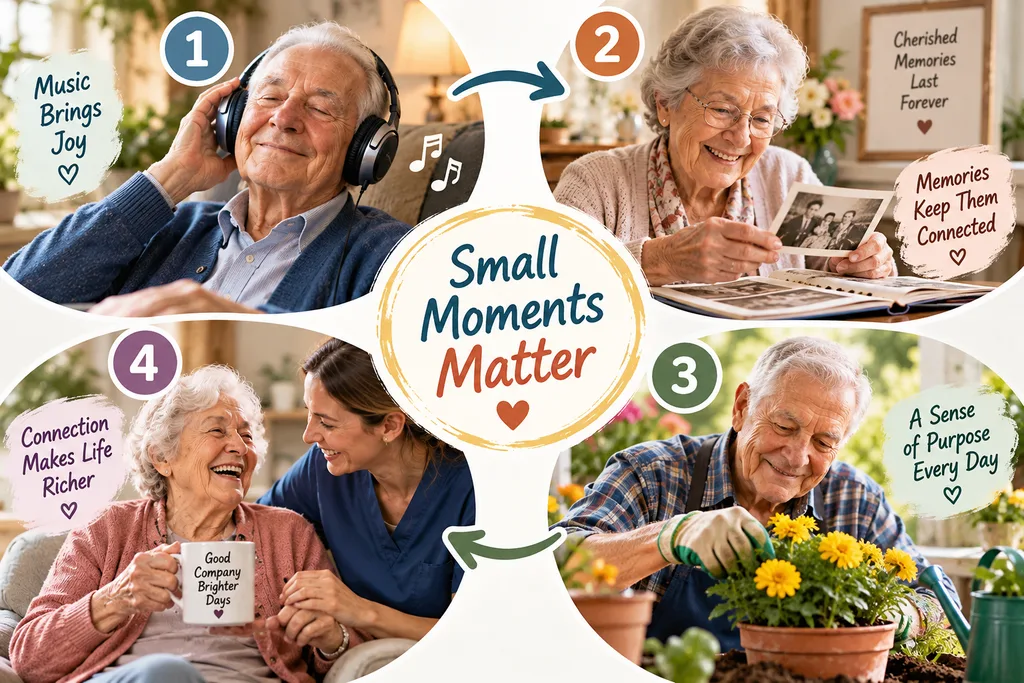
And there’s another part of the bigger picture worth thinking about: memory care isn’t only about daily activities. It can also raise questions about memory function and overall brain health as we get older.
Curious to explore that side of the topic?